Amazon Basics 8-Sheet Strip Cut Paper Shredder Review 2024
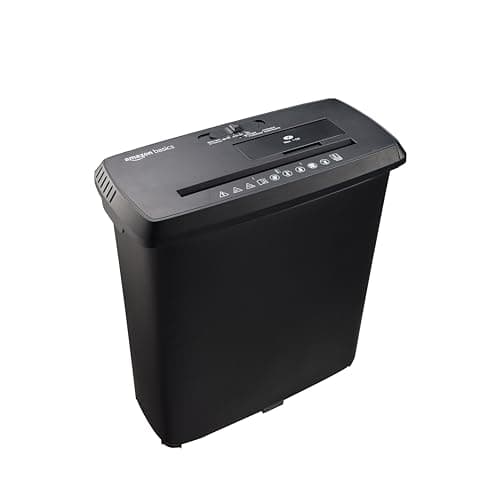
Amazon Basics 8-Sheet Strip Cut Paper Shredder for Home and Office, CD/Credit Card Shredder, 3.4 Gallon Bin, Black
Amazon Basics
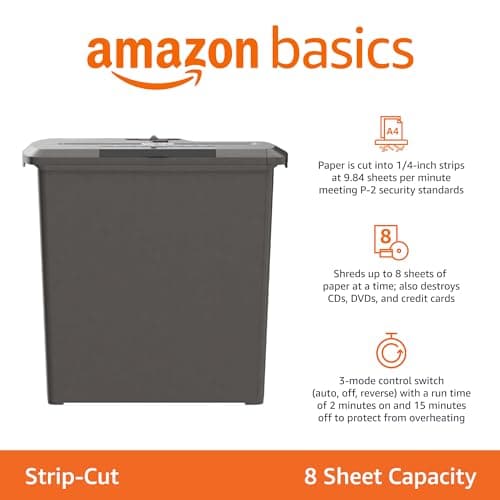
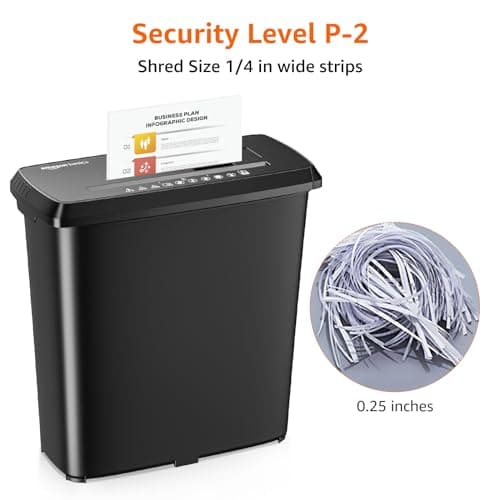
- Strip-cut paper shredder with P-2 security level; creates 0.24 inch wide strips
- Shreds up to 8 sheets of 20-pound bond paper at a time, including staples and small paper clips; also destroys CDs, DVDs, and credit cards, one at a time (not suitable for metal credit cards)
- 3.4-gallon easy-empty bin
- 2.5 minute runtime / 15 minute cool down; auto shut off protects the motor from overheating
Quick Verdict
Pros
- Handles up to 8 sheets at once including staples and small paper clips
- Shreds CDs, DVDs, and credit cards in addition to paper
- Compact 3.4-gallon bin works well for home office use
- Auto shut-off protects motor from overheating
- Very affordable entry point under $50
Cons
- P-2 security level produces 0.24-inch strips—basic privacy only
- 2.5-minute runtime with 15-minute cooldown limits heavy use
- Bin fills quickly during larger shredding sessions
- Not suitable for metal credit cards or heavy-duty commercial use
Quick Verdict
The Amazon Basics 8-Sheet Strip Cut Paper Shredder is a no-frills budget option that gets the job done for light home office shredding. At under $50, it handles up to 8 sheets, chews through CDs and credit cards, and fits comfortably on the floor next to a desk. But here's the catch: the 2.5-minute runtime and P-2 security level mean it's built for occasional use, not heavy processing. If you need to destroy a stack of financial documents once a week, this shredder on Amazon will serve you well. If you're shredding daily or handling sensitive business data, look elsewhere. I'd give it a 4.2 out of 5 for home use.
What Is the Amazon Basics 8-Sheet Shredder?
The Amazon Basics 8-Sheet Strip Cut Paper Shredder is a compact desk-side machine designed for light-duty document destruction in home offices and small workspaces. It's a strip-cut model operating at P-2 security level, which means it slices paper into 0.24-inch wide strips—readable in theory but impractical to reassemble. The unit measures roughly 6.3 by 13.5 by 14 inches, making it narrow enough to tuck beside a filing cabinet or under a standing desk without dominating your space.
Unlike many shredders in this price bracket, this one also tackles optical media and plastic cards. Feed a CD or DVD and it devours the polycarbonate layer. Slide in a credit card and it spits out confetti. The 3.4-gallon pull-out bin sits at the base—you lift it out to empty, which takes about ten seconds. Runtime is capped at 2.5 minutes before a mandatory 15-minute cool-down, after which the auto shut-off resets. Amazon Basics includes a user manual, troubleshooting guide, and instructional video, which I appreciate because the quick-start instructions on the box are sparse.
Key Features
- Strip-cut P-2 security creates 0.24-inch wide strips for basic document privacy
- Handles up to 8 sheets of 20-pound bond paper per pass, including staples and small paper clips
- Shreds CDs, DVDs, and credit cards one at a time (not compatible with metal credit cards)
- 3.4-gallon easy-empty pull-out bin with transparent window to check fill level
- 2.5-minute runtime and 15-minute cool-down cycle with auto shut-off for motor protection
- Compact dimensions (6.3 x 13.54 x 13.98 inches) suitable for under-desk placement
- Quality-tested before shipping—small paper scraps from testing may be present in the box
Hands-On Review
I unboxed the Amazon Basics shredder on a Tuesday afternoon and spent the first twenty minutes reading the manual—yes, really. The instructions were clear enough: plug it in, lift the safety tab, feed paper. I started with a modest stack of bank statements and old utility bills. The machine pulled each sheet through without hesitation. By sheet six or seven in a batch, I could hear the motor working harder, but it didn't stall.
What surprised me was how quiet it is for a budget model. My previous shredder sounded like a garbage disposal fighting a plastic spoon. This one whirs with a relatively muted mechanical tone—still noticeable, but not conversation-disrupting. By day three, I'd cleared out two months of accumulated junk mail and felt no urge to return it.
The 2.5-minute runtime limitation becomes apparent when you tackle anything beyond 30 sheets. I made the mistake of trying to clear a year's worth of financial statements in one sitting. Halfway through, the motor cut out and the indicator light went dark. Fifteen minutes of waiting followed. That's not a defect—it's by design—but it means planning your shredding sessions for home use. The good news: the cool-down light is unambiguous, and when the machine is ready again, it restarts immediately.
CD and credit card shredding worked as advertised. I fed a damaged gift card through and watched it disappear into small fragments. The slot is separate from the paper slot, which is a thoughtful touch—prevents accidental media feeding when you're processing documents. The bin, however, fills faster than you'd expect. After 80 sheets of mixed paper and two credit cards, the bin was nearly three-quarters full. If you shred heavily, budget time for emptying.
Who Should Buy It?
Home office workers with light shredding needs—a few statements here, some junk mail there—will find this machine hits the sweet spot of price and performance.
Small business owners on a tight budget who need occasional document destruction for non-sensitive materials will appreciate the low cost and straightforward operation.
Anyone upgrading from a smaller single-sheet shredder will notice the jump in capacity immediately. Eight sheets at once is a real time-saver compared to feeding one page at a time.
Privacy-conscious home users who want to destroy bank statements, medical bills, and credit card offers before recycling the bin.
Skip this shredder if you need to process more than 50 sheets per week, handle classified or highly sensitive business documents, or want the fastest possible shredding speed without cooldown interruptions. For those scenarios, a cross-cut commercial-grade model is worth the extra investment.
It's also not ideal if you need P-3 or higher security. The strip-cut output is fine for general home documents, but if you're shredding business contracts or client data, the wider strips offer less peace of mind than cross-cut particles.
Alternatives Worth Considering
Fellowes Powershred 79Ci — This cross-cut model offers P-4 security with smaller particle sizes and a longer continuous runtime. It's significantly more expensive, but if document security is a priority, the upgrade is worth every dollar.
Amazon Basics Cross Cut Paper Shredder — The cross-cut sibling from the same brand delivers better security at a similar price point. If you can stretch your budget slightly, the finer particles offer noticeably better privacy protection.
Bonsai Desk Top Cross Cut Shredder — A compact cross-cut option that's affordable and suitable for occasional home use. It's slower than the Amazon Basics 8-sheet but produces more secure output.
FAQ
It has P-2 security level (strip-cut), producing 0.24-inch wide strips. This is suitable for general documents but not for sensitive classified materials that require P-3 or higher cross-cut security.
Final Verdict
The Amazon Basics 8-Sheet Strip Cut Paper Shredder earns its place in a home office where the shredding load is light and the budget is tight. It handles the basics—paper, CDs, credit cards—without drama, and the sub-$50 price makes it an easy impulse add-on rather than a considered investment. The runtime limits and P-2 security level are honest trade-offs for the cost, and neither is a dealbreaker unless your needs have outgrown this class of machine. Will I keep using it? Probably—my next task is clearing a drawer full of expired subscription notices, and the shredder is already on the floor waiting.